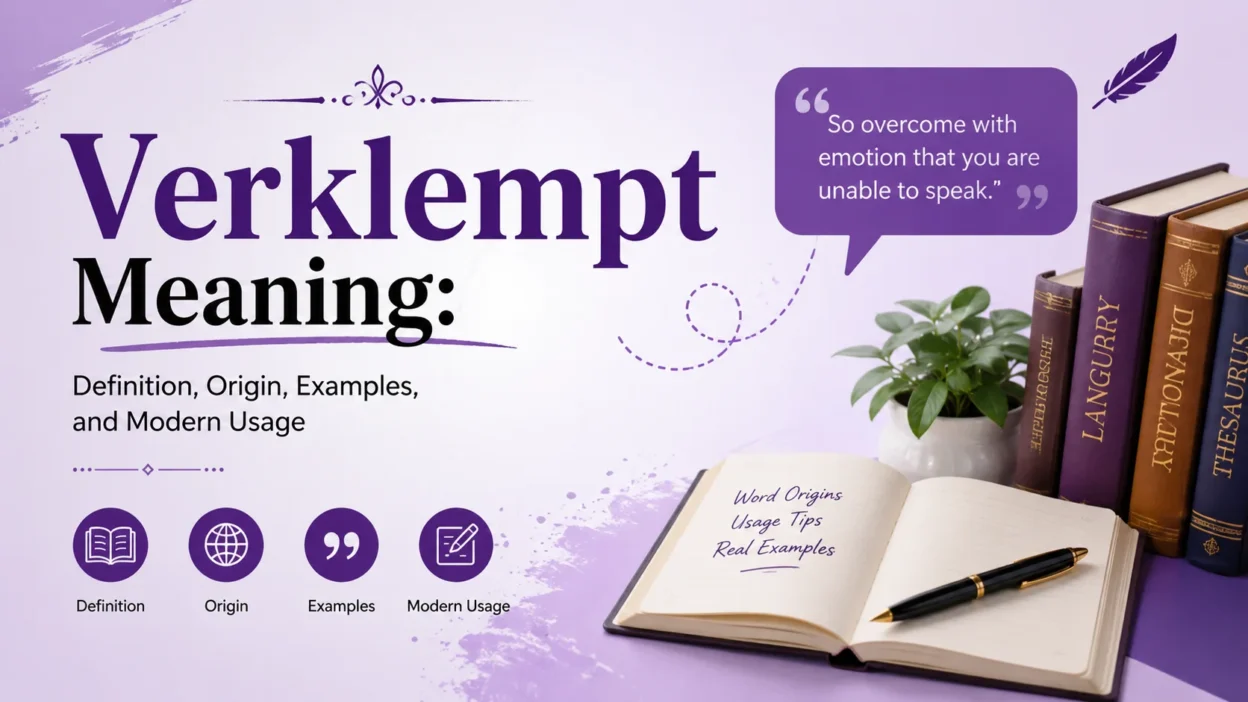
Verklempt is more than a simple word or term. The verklempt meaning comes from Yiddish and has a rich Yiddish origin. This borrowed word has become part of modern English, American English, and everyday English through language evolution and American usage. Today, this expressive word, phrase, and part of the English language appears in spoken English and English vocabulary because it captures a unique feeling that many people experience. Its definition, usage, and everyday use make it valuable in any vocabulary, while dictionaries, encyclopedias, and every reliable article explain how this cultural word adds depth to linguistic and linguistic expression.
From personal experience, learning verklempt completely changed how I describe emotional moments because very few words can truly express human emotion with such accuracy. The meaning reflects being emotionally overwhelmed, overwhelmed, or overwhelmed by emotion after a heartfelt wedding speech, attending a friend’s wedding, saying goodbye to an old friend, reading a touching letter, watching a touching movie or movie scene, or hearing news and excellent news. During these situations, powerful emotions, strong emotions, high emotions, and overwhelming feelings can run high, creating an unforgettable emotional moment that leaves you speechless, makes you struggle or struggle to speak, and sometimes feel lost for words. That reaction, whether a powerful reaction or deep reaction, often becomes meaningful, memorable, sentimental, and filled with appreciation, understanding, happiness, sadness, happy, sad, and genuine human feelings.
The context always shapes how verklempt is understood because it describes an emotional state, emotional response, emotional experience, emotional expression, emotional language, emotional vocabulary, and emotional intensity in real communication and everyday conversation. From a semantic, contextually relevant, and NIP viewpoint, this entity naturally fits into a sentence where speech, speaking, and conversation reflect authentic human communication. The feeling, feeling overwhelmed, intense feeling, strong feeling, powerful feeling, emotion, emotions, and emotional response may appear suddenly or temporarily, yet every touching moment and heartfelt moment reminds us why this expression continues to enrich the language and help people describe deeply emotional experiences.
Quick Answer
Verklempt means emotionally overwhelmed, choked up, or unable to speak clearly because of strong feelings. The word originated in Yiddish and is commonly used in English to describe moments of joy, gratitude, nostalgia, sadness, or deep emotional connection.
What Does Verklempt Mean?
The verklempt meaning goes beyond simply feeling emotional. It describes a moment when emotions become so intense that they temporarily affect your ability to speak or think clearly. Instead of saying someone is just “emotional,” calling them verklempt paints a much clearer picture.
Imagine a father watching his daughter walk across the graduation stage. He smiles proudly, but tears fill his eyes, and he struggles to finish his sentence. That is exactly what being verklempt feels like.
Unlike many emotional words, verklempt often combines several feelings at once. A person may experience happiness, nostalgia, gratitude, and sadness simultaneously. That’s what makes the word so unique.
Key Characteristics of Being Verklempt
- Feeling emotionally overwhelmed
- Becoming choked up while speaking
- Being close to tears
- Experiencing deep joy or sadness
- Feeling touched by an emotional moment
- Struggling to find the right words because of emotion
The word doesn’t describe weakness. Instead, it reflects genuine human emotion during meaningful experiences.
The Etymology and Origins of Verklempt
Every interesting word has a story, and verklempt is no exception. Its history stretches back through centuries of language and culture before becoming part of modern English.
Yiddish Roots
The word verklempt comes from Yiddish, a language spoken by Ashkenazi Jewish communities throughout Central and Eastern Europe. Yiddish combines elements of German, Hebrew, Aramaic, and several Slavic languages, creating a rich vocabulary filled with expressive emotional words.
In its original sense, verklempt referred to feeling emotionally constricted or overwhelmed. Rather than describing simple sadness, it conveyed the sensation of emotions becoming so powerful they almost closed your throat.
Many Yiddish words have entered English because they express ideas that English cannot capture quite as precisely. Words like chutzpah, schlep, kvetch, and mensch have followed a similar path.
How Verklempt Entered English
Large waves of Jewish immigration brought Yiddish expressions to the United States during the late nineteenth and early twentieth centuries. As communities mixed, many colorful expressions became part of everyday American speech.
Initially, verklempt remained mostly within Jewish communities. Over time, however, writers, comedians, actors, and television personalities introduced it to a much broader audience.
Today, millions of English speakers recognize the word even if they have never studied Yiddish.
How the Meaning Has Evolved
Originally, verklempt focused on emotional distress and inner tension. Modern English has broadened its meaning.
Today, the word can describe nearly any emotionally overwhelming experience, including:
- Hearing an inspiring speech
- Watching a touching family reunion
- Celebrating a wedding
- Remembering a loved one
- Seeing an unexpected act of kindness
- Watching a child achieve an important milestone
This broader meaning makes the word even more useful in everyday conversation.
How to Pronounce Verklempt Correctly
Knowing the meaning is only part of the equation. Pronouncing the word correctly helps you use it naturally.
Phonetic Pronunciation
The most common pronunciation is:
ver-KLEMPT
The emphasis falls on the second syllable.
Syllable Breakdown
The word has two main parts:
- ver
- klempt
Keep the ending crisp instead of stretching it out.
Common Pronunciation Mistakes
Many English speakers accidentally:
- Add an extra syllable
- Emphasize the first syllable
- Drop the final “t”
- Pronounce it too slowly
A short, confident pronunciation sounds much more natural.
What Does It Feel Like to Be Verklempt?
Everyone experiences emotional moments differently. Still, people who feel verklempt often describe remarkably similar experiences.
You might notice:
- A lump in your throat
- Watery eyes
- Difficulty finding words
- A shaky voice
- Goosebumps
- A sudden rush of memories
- A warm feeling in your chest
These reactions happen because strong emotions activate both your mind and body at the same time.
Scientists have found that emotionally moving experiences can trigger physical responses through the nervous system. Crying, goosebumps, and temporary speech difficulties are all normal human reactions to intense emotion.
How to Use Verklempt Correctly
Using verklempt correctly depends more on context than grammar.
Grammar and Part of Speech
In modern English, verklempt usually functions as an adjective.
Examples include:
- “She became verklempt during the ceremony.”
- “He looked completely verklempt.”
- “I was verklempt after reading the letter.”
Formal vs. Informal Usage
Although dictionaries recognize the word, it remains mostly informal.
It fits naturally in:
- Everyday conversation
- Personal essays
- Memoirs
- Blog posts
- Interviews
- Creative writing
- Social media
For highly formal writing, words like emotionally overwhelmed or deeply moved may be more appropriate.
When You Should Use Verklempt
Use the word when someone experiences overwhelming emotion.
Common situations include:
- Weddings
- Graduations
- Retirement celebrations
- Family reunions
- Military homecomings
- Adoption ceremonies
- Anniversary speeches
- Emotional reunions
- Memorial services
When You Should Avoid It
Avoid using verklempt for ordinary emotions.
For example, someone who is:
- Angry
- Frustrated
- Nervous before a test
- Tired after work
is not necessarily verklempt.
The word should be reserved for moments involving genuine emotional depth.
Examples of Verklempt in Sentences
Examples make the verklempt meaning much easier to understand.
Everyday Conversation
- I became verklempt when I watched my son receive his diploma.
- She looked verklempt after hearing the surprise announcement.
- Everyone at the reunion grew a little verklempt during the slideshow.
Workplace
- The retiring CEO became verklempt while thanking the employees.
- Several team members felt verklempt after hearing the farewell speech.
Family
- Grandma grew verklempt while opening the family scrapbook.
- His parents were completely verklempt during the wedding ceremony.
Social Media
- That rescue video left me totally verklempt.
- Not me getting verklempt over a commercial.
- This reunion had everyone feeling verklempt.
Common Situations Where People Feel Verklempt
Some moments naturally bring powerful emotions.
People often feel verklempt during:
- Wedding ceremonies
- Graduation celebrations
- Retirement parties
- Surprise reunions
- Military homecomings
- Birth of a child
- Adoption celebrations
- Family gatherings
- Emotional speeches
- Watching old family videos
- Reading handwritten letters
- Seeing lifelong dreams come true
Each situation involves meaningful emotional connections that can overwhelm even the calmest person.
Synonyms of Verklempt
No English word perfectly replaces verklempt, but several come close depending on the situation.
| Word | Meaning | Best Used When |
| Choked up | Unable to speak because of emotion | Speech becomes difficult |
| Emotional | Experiencing strong feelings | General emotional state |
| Moved | Deeply touched | Positive emotional experiences |
| Overwhelmed | Feeling more emotion than expected | Various emotional situations |
| Tearful | Close to crying | Visible emotional response |
| Sentimental | Filled with affectionate memories | Nostalgic moments |
| Touched | Appreciative and emotional | Acts of kindness |
Each synonym captures part of the experience, but verklempt uniquely combines several emotions into one expressive word.
Verklempt vs. Similar Emotional Words
People often confuse verklempt with other emotional expressions.
Verklempt vs. Emotional
Someone can feel emotional without becoming verklempt.
Being verklempt suggests the emotions are intense enough to interrupt speech or cause tears.
Verklempt vs. Choked Up
These expressions are very similar.
The difference is that choked up describes the physical reaction, while verklempt includes the emotional state behind it.
Verklempt vs. Overwhelmed
Being overwhelmed can refer to stress, work, or responsibilities.
Being verklempt specifically refers to emotional overwhelm rather than practical stress.
Verklempt vs. Sentimental
Sentimental describes affectionate feelings or nostalgia.
Verklempt describes what happens when those emotions become overwhelming.
Is Verklempt a Positive or Negative Word?
Interestingly, verklempt is neither positive nor negative.
Instead, it reflects emotional intensity.
Someone can become verklempt because they are:
- Extremely happy
- Deeply grateful
- Heartbroken
- Nostalgic
- Proud
- Inspired
- Moved by kindness
The word focuses on the emotional response rather than the emotion itself.
Verklempt in American Culture
Although the word has Yiddish origins, its popularity exploded in the United States.
Comedy, television, movies, and interviews helped introduce it to audiences who had never heard Yiddish before.
Saturday Night Live’s Influence
One of the biggest reasons many Americans recognize verklempt is Saturday Night Live.
Several comedy sketches humorously featured characters becoming “verklempt,” making the word memorable for millions of viewers.
Those sketches transformed an unfamiliar Yiddish word into a recognizable part of American pop culture.
Modern Usage
Today, writers, journalists, celebrities, and everyday speakers continue using verklempt whenever ordinary words fail to express emotional moments.
Although still informal, the word remains popular because it communicates emotion with remarkable precision.
Common Mistakes People Make With Verklempt
Avoid these common errors.
Using It for Everyday Stress
Feeling overwhelmed by work does not necessarily mean you’re verklempt.
Assuming It Only Means Sadness
Many people become verklempt because of happiness or gratitude.
Mispronouncing the Word
The correct pronunciation is ver-KLEMPT, with emphasis on the second syllable.
Using It in Highly Formal Writing
Although acceptable in many contexts, formal reports and academic writing usually benefit from more neutral language.
Conclusion
The verklempt meaning is more than simply feeling emotional. It describes those rare moments when powerful emotions become so strong that you struggle to find the right words. Whether the feeling comes from joy, gratitude, nostalgia, or sadness, verklempt captures an emotional experience that many other English words cannot express as clearly. As a Yiddish word that has become part of modern English, it continues to enrich everyday conversations and helps people describe heartfelt moments with greater precision.
FAQs
Q1.What does verklempt mean?
Verklempt means being emotionally overwhelmed or so deeply moved that you struggle to speak. It often describes moments filled with joy, sadness, gratitude, or nostalgia.
Q2.Is verklempt an English word?
Verklempt originated in Yiddish, but it is now widely recognized in American English and appears in many English dictionaries as an accepted loanword.
Q3.Can verklempt describe happy emotions?
Yes. Although people often associate it with sadness, verklempt can also describe happiness, pride, appreciation, love, or any emotion that becomes overwhelming.
Q4.How do you use verklempt in a sentence?
You can use it as an adjective to describe someone’s emotional state. For example: “She became verklempt during her daughter’s wedding speech.”
Q5.What is the difference between verklempt and emotional?
Emotional is a broad term that describes any strong feeling, while verklempt specifically refers to being so emotionally overwhelmed that you become choked up, speechless, or temporarily unable to express yourself clearly.