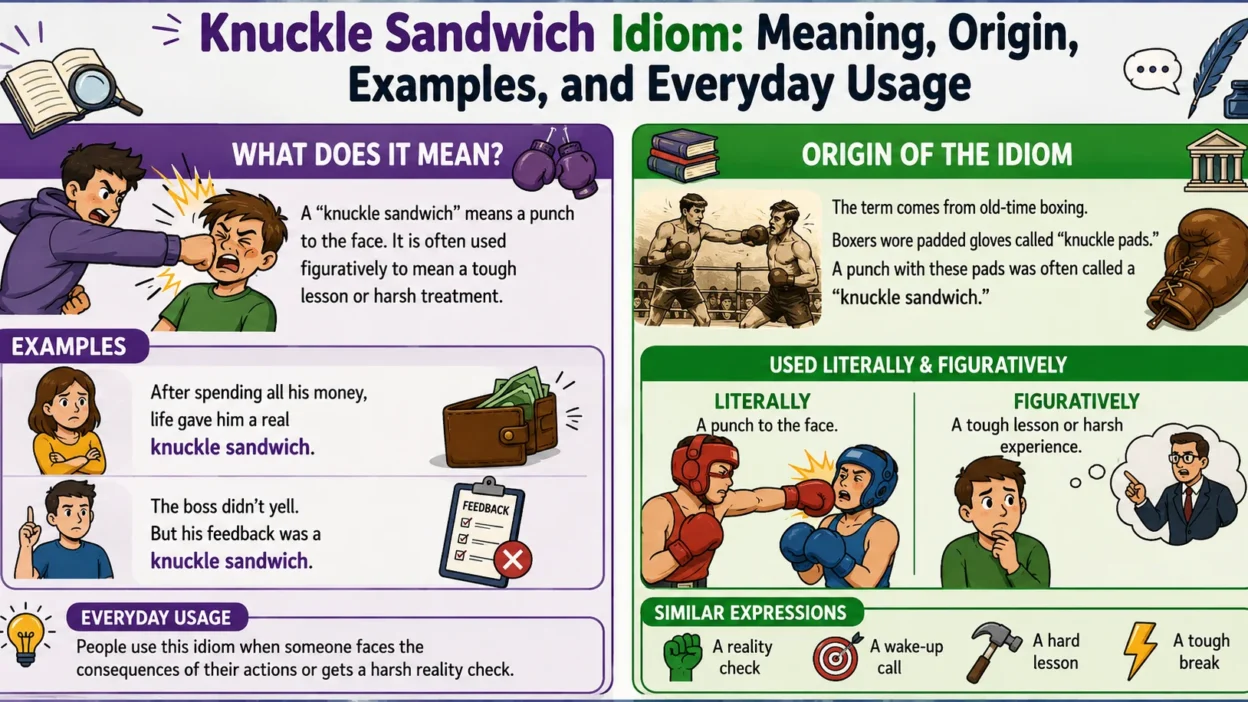
Knuckle Sandwich is an informal idiom in the English language with a figurative meaning, not a literal meal or food from a diner menu today.A Knuckle Sandwich, also written as knuckle sandwich, is a well-known expression and phrase in the English language. Although the words knuckle and sandwich may sound like something you can eat, the term has a figurative rather than literal meaning. It means a punch, a hit with a fist, or a threat to threaten someone or another person. From my experience studying everyday speech, people quickly understand the context after they hear it in a conversation, because the tone, communication, and dialogue usually make the speaker’s intent clear. A simple example can change a joke into a warning, depending on the situation.
The core image creates a vivid picture of bread and filling, yet the “sandwich” is made from knuckles instead. That unusual mix brings together fun, humour, and a cartoonist style often found in cartoons, movies, TV shows, fiction, comedy, and other entertainment. Friends may use the idiom in playful, playful, joking, or humorous moments, while an aggressive, violent, threatening, or serious exchange carries genuine caution. The surface idea feels light, but underneath it can signal a real warning. A writer may capture this voice in formal writing by creating exaggerated banter, a tough character, or colourful expressions that reflect the world of everyday speech.
It is important to build understanding by grasping the meaning of the expression rather than taking it at face value. As you use it and see it used, you will notice that people talk differently with friends, and friendship, interaction, and social settings shape the message. You might actually want to know this first, because the phrase takes different forms into everyday communication, among different speakers, and where it appears can really change how others react. Maybe you will run across it in a book, where it may suggest playful teasing rather than a real threat. These rough aspects showcase how creative the language can be, and the expression stays stuck in memory because it is usually, most often, and only rarely misunderstood.
Simple Definition of the Idiom
A knuckle sandwich means:
- a punch in the face
- a threat of physical violence
- a joking way to say someone deserves a beating
The phrase does not describe an actual sandwich. It is a figurative expression built on slang, humor, and threat.
Literal Meaning vs. Figurative Meaning
Literally, a sandwich is food made with bread and filling. A knuckle sandwich is not food at all. The idiom uses the word sandwich for comic effect, while knuckles suggest a fist or punch.
That contrast is what gives the phrase its bite. It feels silly and harsh at the same time. English does this a lot. A phrase can sound playful while still carrying a sharp message. Think of it like a joke with a raised eyebrow.
Is “Knuckle Sandwich” Always a Threat?
Not always. Tone matters.
Sometimes someone says it as a joke among friends. Other times it carries real hostility. In a movie, for example, a character might say, “Keep talking and you’ll get a knuckle sandwich,” and the audience instantly understands the threat.
The same phrase can also sound cartoonish in a comic strip, where the violence is exaggerated for humor. So the words stay the same, but the social meaning changes.
The Origin and History of the Knuckle Sandwich Idiom
The exact origin of knuckle sandwich is not pinned to one clean moment. Like many slang expressions, it grew out of spoken American English and spread through popular culture. Most evidence points to early 20th-century usage, especially in humorous or tough-guy speech.
What makes the phrase interesting is that it feels old, but it also feels theatrical. That is usually a clue that slang moved through entertainment before it became everyday language.
Earliest Recorded Uses in American English
The phrase appears in early American slang traditions and was likely circulating before it showed up widely in print. It fits the style of punchy, exaggerated expressions that became common in the late 1800s and early 1900s.
That period was full of colorful street slang, vaudeville jokes, comic strips, and movie dialogue. Idioms like this often spread because they sounded memorable. “Knuckle sandwich” is easy to hear, easy to repeat, and hard to forget.
How the Expression Became Popular in the Early 20th Century
The phrase likely grew because it had three things going for it:
- it sounded funny
- it was easy to picture
- it carried a threatening edge without needing much explanation
That combination is powerful in slang. A phrase does not need to be elegant to survive. It just needs to be memorable. Knuckle sandwich delivers a clear mental image in two words. That is part of its staying power.
The Role of Cartoons, Comics, and Classic Movies
Cartoons and comics helped popularize tough-guy language in a way that felt playful rather than dangerous. A character might roll up their sleeves and threaten someone with a knuckle sandwich, and the whole scene would be exaggerated for laughs.
Classic movies also played a role. Old-fashioned gangster stories, streetwise dialogue, and slapstick scenes all helped keep the idiom alive. Once a phrase enters a popular script, it can spread far beyond the original setting.
That is often how idioms survive in English. They move from the street to the stage, from the stage to film, and from film to daily speech.
Why the Phrase Uses the Word “Sandwich”
The word sandwich makes the phrase sound absurd. That absurdity is the point.
English slang loves surprises. A food word paired with a violent word creates an odd little package that grabs attention. The phrase is almost mock-polished. It sounds like something you could order, but the “filling” is your fist.
That comedic clash helps explain why the phrase lasted. If it had simply been a “knuckle punch,” it would have been plain. Knuckle sandwich has flavor.
Knuckle Sandwich Idiom: The Violent Delicacy of Language
The phrase is a good example of how English can soften a harsh idea through humor. It is not soft, of course. It still points to violence. But it wraps that violence in a playful shell.
That shell matters. In speech, people often use joking language to say things they do not fully mean or do not want to say directly. A phrase like this can function as a warning, a joke, or a performance of toughness.
Why the Idiom Feels Funny and Aggressive at the Same Time
The humor comes from contrast. A sandwich is harmless. A knuckle is not. Put them together and you get a strange mental picture that sounds almost childish. Then the meaning lands and the tone shifts.
That sudden shift is a classic feature of slang. It catches the listener off guard. The mind smiles for a second, then realizes the message is not friendly at all.
How Tone Changes the Meaning
Here is a useful rule: tone decides whether the phrase sounds playful or threatening.
For example:
“Keep nagging me and you’ll get a knuckle sandwich.”
In a joking voice, that might be harmless banter. In an angry voice, it becomes a real threat.
The same sentence can mean very different things depending on face, posture, and relationship. Spoken language carries more than words. It carries energy.
A Mini Case Study: Comedy vs. Conflict
Imagine two scenes.
In the first, two friends are joking about a video game. One says, “Mess with my score again and I’ll serve you a knuckle sandwich.” Both laugh. No one feels unsafe.
In the second, two strangers argue outside a store. One says the same line with a clenched jaw and a hard stare. Now the phrase sounds menacing, not funny.
The words did not change. The social context did.
That is why idioms like this deserve careful reading. Language is never just vocabulary. It is behavior.
Modern Usage and Understanding of the Idiom
Today, knuckle sandwich is mostly heard in informal speech, fictional dialogue, and joking insults. It is less common in ordinary conversation than it once was, but people still recognize it right away.
That recognition is important. Even if people do not use the phrase every day, many still understand it because of its strong cultural footprint.
From the Big Screen to Everyday Conversations
Modern usage often comes from inherited pop culture. People know the phrase from cartoons, old movies, and comic-style dialogue. That means the idiom can feel a little old-fashioned, but it is still instantly readable.
In everyday conversation, someone might use it to sound tough without being too serious. It can also be used ironically, especially when someone wants to imitate an old-school gangster or cartoon villain.
Recognizing a Mixture of Humor and Threat
The phrase lives in the border zone between joke and warning. That is what makes it useful, and also risky.
If you hear it in a light voice between friends, it may be nothing more than playful trash talk. If you hear it in a tense argument, it is best not to shrug it off. Even humorous violence can cross a line when tempers are high.
Where the Idiom Fits Best
The idiom works best in:
- casual speech
- fictional dialogue
- comedy sketches
- retro-style writing
- exaggerated teasing among close friends
It does not fit well in:
- professional emails
- academic writing
- legal documents
- formal public statements
That mismatch matters. Language should match the setting, or it risks sounding childish, rude, or threatening.
How to Use “Knuckle Sandwich” Correctly
If you decide to use the idiom, use it with caution. It is vivid, but it is not polite. In the wrong setting, it can make you sound hostile or immature.
That does not mean the phrase is useless. It just means the phrase has a narrow lane.
Common Situations Where the Idiom Appears
You are most likely to hear it in:
- movies and TV shows
- jokes or insults
- old-fashioned slang references
- playful roughhousing between friends
- fictional dialogue that wants a tough voice
It shows up less often in serious conversation because the phrase is more stylized than natural in many modern settings.
Formal vs. Informal Usage
Here is a simple comparison:
| Setting | Is “Knuckle Sandwich” Appropriate? | Why |
| Casual banter | Sometimes | Can sound joking if the relationship is close |
| Fiction writing | Yes | Useful for character voice and tone |
| Comedy | Yes | Strong comic effect |
| Workplace | No | Sounds aggressive and unprofessional |
| School assignment | Usually no | Too slang-heavy for formal writing |
| Conflict resolution | Absolutely not | Escalates tension instead of calming it |
The table shows the main point: the phrase belongs to informal, stylized language.
Spoken English vs. Written English
In speech, the phrase can land quickly because tone fills in the gaps. In writing, especially in plain prose, the phrase can seem louder than intended.
A writer might use it inside dialogue to reveal a character’s personality. Outside dialogue, though, it can feel out of place unless the piece is intentionally casual or humorous.
When You Should Avoid It
Avoid the phrase when you want to sound:
- respectful
- professional
- calm
- diplomatic
- precise
It can also backfire if the listener does not know the idiom well. They may take it more literally than you intended. That can create confusion or offense.
Knuckle Sandwich Idiom Examples in Everyday Conversations
The knuckle sandwich idiom often appears in casual conversations, movies, and humorous exchanges to suggest a punch or warn someone to stop annoying behavior. Most of the time, people use it playfully rather than as a genuine threat. However, because it refers to physical violence, you should avoid using it in professional or sensitive situations. Understanding the speaker’s tone and the surrounding context is the key to interpreting the expression correctly.
Friendly and Humorous Examples
A joking version might sound like this:
- “Keep stealing my fries and you’ll get a knuckle sandwich.”
- “One more prank like that and you’re asking for a knuckle sandwich.”
- “He acted tough until someone threatened him with a knuckle sandwich.”
In these examples, the phrase is not meant as a real threat. It is exaggerated for humor.
Fictional Dialogue Examples
Writers often use the idiom to build character voice:
“Back off, buddy, or I’ll serve you a knuckle sandwich.”
That line tells you something right away. The speaker is trying to sound rough, direct, and maybe a little old-school.
Another example:
“If this keeps up, somebody’s getting a knuckle sandwich.”
This version feels even more vague and cinematic. It suggests danger without spelling out every detail.
Workplace and School Examples
These examples show where not to use it:
- “Send me one more rude email and I’ll give you a knuckle sandwich.”
This sounds threatening and inappropriate. - “He joked about a knuckle sandwich during the staff meeting.”
This would sound unprofessional and would likely raise eyebrows.
In these settings, the idiom can create the wrong impression fast. A casual joke can become a complaint if the audience does not know your intent.
Is “Knuckle Sandwich” Offensive or Funny?
The answer is: it can be both.
That depends on who says it, how they say it, and who hears it. A phrase that sounds funny in a cartoon can sound ugly in a real argument. English idioms often live on that edge.
Understanding Tone and Context
Tone is the steering wheel here. Without tone, the phrase looks like a threat. With the right tone, it can sound like a joke. With the wrong tone, it can sound like a warning.
That is why people should be careful with slang that implies violence, even when it seems silly. Humor does not cancel meaning. It only shapes it.
Regional and Cultural Differences
Some listeners may hear the phrase and think of old movies or cartoons. Others may see it as outdated slang. In some communities, people use it sparingly because it feels theatrical. In others, it may be part of a rough joking style.
Culture changes the weight of language. A phrase that once sounded fresh can later feel vintage, ironic, or even campy. Knuckle sandwich now often sit in that older, stylized space.
Modern Perception of the Expression
Today, many people understand the idiom more as a pop-culture phrase than a living threat. It has a comic flavor. Still, because it refers to violence, it should never be treated lightly in a real conflict.
A good rule is simple: if the setting would not tolerate even a small threat, do not use the phrase there.
Quick Comparison: Knuckle Sandwich and Similar Expressions
Here is a useful look at how the idiom compares with similar tough-sounding phrases.
| Expression | Meaning | Tone | Typical Use |
| Knuckle sandwich | A punch or threat of being punched | Funny, rough, or aggressive | Informal speech, fiction, comedy |
| Dead meat | Someone is in serious trouble | Threatening, dramatic | Informal speech, movies, kids’ talk |
| Sock it to him | Hit him or give it your best effort | Old-fashioned, energetic | Slang, humor, older usage |
| Duke it out | Fight or settle a disagreement | Rough but less direct | Informal speech |
| Put up your dukes | Get ready to fight | Playful, old-school | Humor, retro speech |
The similarities are clear. The differences are mostly about tone and intensity.
A Short Reality Check: Why This Idiom Still Matters
Even if knuckle sandwich is not the hottest phrase in modern slang, it still matters because it shows how English builds meaning through surprise. The phrase is silly on the outside and serious on the inside. That contrast is the engine.
It also teaches a bigger lesson about idioms. You cannot always judge a phrase by its literal words. Sometimes the oddest phrase carries the clearest message.
A knuckle sandwich does not feed anyone. It warns them.
Where the Idiom Fits in Modern English
This phrase now lives mostly in three places:
- old slang traditions
- entertainment language
- humorous or exaggerated speech
That does not make it useless. It makes it specific. Many strong idioms survive not because people use them every day, but because they remain instantly understandable.
If a phrase can still make readers picture the message in one second, it still has power.
What This Idiom Teaches About English
The biggest lesson from knuckle sandwich is that English loves contrast. It likes to hide sharp ideas inside playful packaging. That is part of what makes idioms so memorable.
The phrase also shows how slang travels. A line can start as street talk, move into comedy, and end up as a familiar cultural reference. Along the way, the meaning stays mostly the same, but the emotional flavor changes.
That is language in motion. Messy, vivid, and alive.
Conclusion
A Knuckle Sandwich is a classic English idiom that uses a humorous image to describe a threat or punch, not an actual sandwich. The phrase appears in everyday conversation, movies, TV shows, fiction, and comedy, where its meaning depends on the context and tone. Learning this expression helps you better understand informal English and recognise when it is being used as a joke, playful banter, or a serious warning.
FAQs
Q1. What does a Knuckle Sandwich mean?
A Knuckle Sandwich is an informal English idiom that means a punch or a threat to hit someone with a fist. It has a figurative meaning and is not related to actual food or a sandwich.
Q2. Is Knuckle Sandwich meant to be taken literally?
No. Knuckle Sandwich has a figurative rather than a literal meaning. It is an expression used to describe the idea of a punch, not something you can eat.
Q3. Where is the phrase Knuckle Sandwich commonly used?
You can hear the phrase in everyday conversation, movies, TV shows, fiction, comedy, cartoons, and other forms of entertainment. It is most common in informal communication.
Q4. Is Knuckle Sandwich always offensive?
Not always. Friends may use it in a playful, joking, or humorous way. However, in a different context or tone, it can become a real warning or threat, so understanding the situation is important.
Q5. Should you use Knuckle Sandwich in formal writing?
In most cases, no. Since Knuckle Sandwich is an informal idiom, it works better in casual speech, fiction, or comedy. A writer may include it in formal writing only to capture a tough, conversational voice or create colourful expressions.