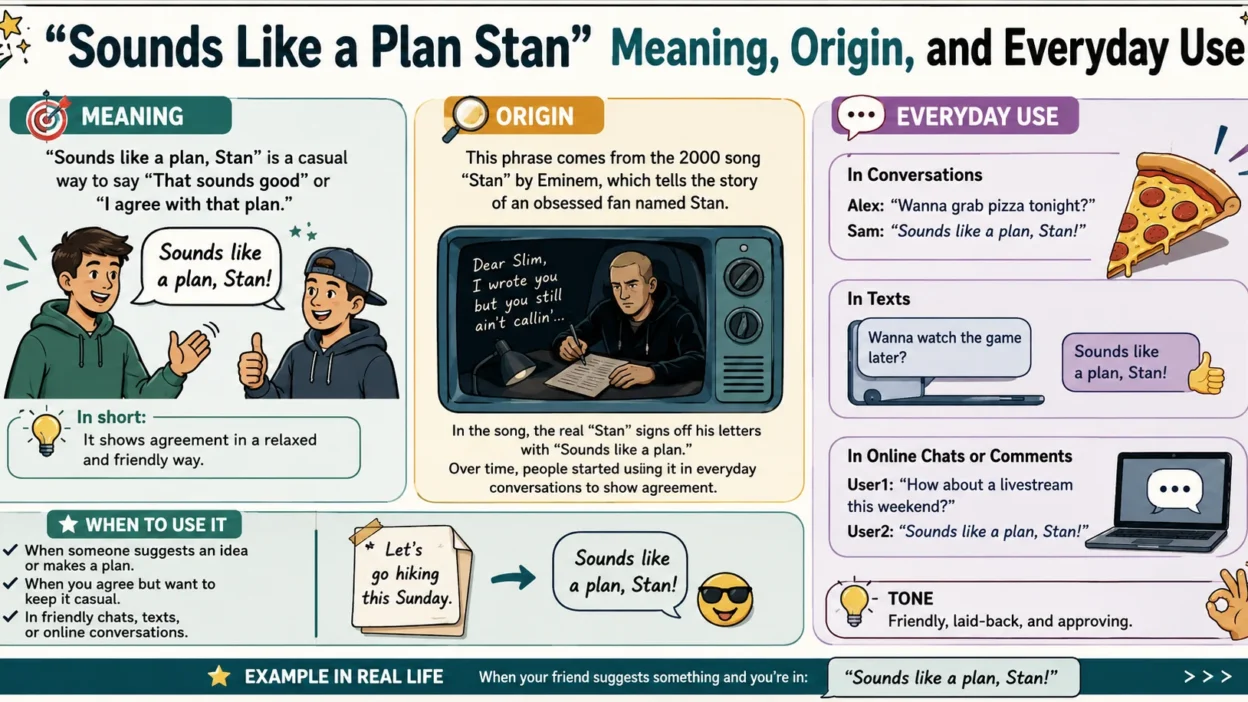
“Sounds Like a Plan Stan adds a playful touch to chats, helping people show agreement and readiness when a suggestion feels like a good idea. This casual expression is often used in everyday conversations when someone wants to accept a plan in a friendly way. Instead of giving a simple “yes,” people use this phrase to make their response sound more relaxed, engaging, and memorable. Its rhythm and rhyme create a natural charm that makes the expression easy to remember.
The phrase works well when friends, coworkers, or family members discuss ideas, meetings, or activities. For example, if someone suggests a coffee shop visit, a dinner plan, or a weekend trip, replying with this phrase shows approval and willingness to move ahead. The name Stan is not connected to a specific person; it is included because the rhyme adds humor and personality. This playful wording keeps communication light while showing that the proposed idea is accepted.
In casual speech, this expression represents a simple form of agreement without needing complicated words. It fits naturally into spoken English and everyday English because it sounds friendly and easygoing. The phrase turns a normal response into something more interesting, helping people communicate acceptance, confirmation, and enthusiasm while keeping conversations open and enjoyable.
Sounds Like a Plan Stan Meaning and Tone
The meaning is simple, but the tone matters just as much. “Sounds like a plan, Stan” usually feels:
- Friendly
- Playful
- Casual
- Slightly humorous
- Confident, but not forceful
It does not usually sound formal. It does not belong in serious documents, legal writing, or polished business email. Instead, it belongs in relaxed conversation where a little charm helps.
Think of it like a handshake with a grin. The message is agreement. The style is personality.
You can also break the phrase into two parts:
- “Sounds like a plan” = I agree with this idea.
- “Stan” = a rhyming tag added for fun.
That extra word does not change the basic meaning. It changes the flavor.
Sounds Like a Plan Stan Origin and Background
The exact origin of “sounds like a plan, Stan” is hard to pin down. That is common with many informal expressions. Casual language often grows through repeated use rather than through a single inventor or a neat documented birth date.
The base phrase, “sounds like a plan,” has been part of everyday English for a long time. People use it when they accept an arrangement or approve a suggestion. The addition of “Stan” appears to be a rhyming flourish that makes the line more playful and more catchy.
That kind of pattern is common in English. Speakers often add a name or rhyme to a phrase just because it sounds good. English loves this sort of thing. It is the same reason people say things like:
- “No problem, Bob.”
- “Easy peasy.”
- “See you later, alligator.”
These expressions do not need strict logic to survive. They survive because they are easy to say and easy to remember.
The Base Phrase Before the Rhyme
Before the playful ending became popular, people already used “sounds like a plan” on its own. That phrase is still widely used today. It is clear, direct, and flexible.
For example:
- “We’ll leave after lunch.”
- “Sounds like a plan.”
That version works in conversation, texting, and everyday planning. Adding “Stan” simply gives it more personality. It feels more lighthearted, almost like a wink.
Why “Stan” Fits So Well
“Stan” works because it rhymes neatly with “plan.” That rhyme gives the phrase a rhythm people enjoy saying. It lands smoothly in speech. It also sounds friendly, almost sitcom-like.
The word itself does not carry a deep meaning in this expression. It is not always a reference to a real Stan. In most cases, it is simply there for the sound.
That matters. Many expressions stay alive because they sound good out loud. Language is practical, but it is also musical. This phrase has both.
Sounds Like a Plan Stan and Rhyming in English
Rhyming phrases have a special place in English. They make speech feel lively. They also help people remember lines faster. That is why advertisers, comedians, teachers, and everyday speakers use rhymes so often.
A rhyme creates a tiny burst of pleasure. It lands cleanly. The ear catches it. The brain keeps it.
“Sounds like a plan, Stan” works for the same reason. It is short. It is rhythmic. It has a little bounce. People like that.
Why Rhyming Phrases Stick
Rhyming catchphrases tend to stick because they combine:
- Sound pattern
- Rhythm
- Simplicity
- Humor
- Repetition potential
This is why people remember them after hearing them once or twice. They are sticky in the best way.
For example, compare these two replies:
- “Okay, that works.”
- “Sounds like a plan, Stan.”
Both communicate agreement. Only one has a little sparkle.
Common Rhyming Patterns in English
English has many rhyme-based casual lines. Some are old. Some are playful. Some are just silly enough to work.
Here are a few examples:
- “No way, José.”
- “See you later, alligator.”
- “In a while, crocodile.”
- “Easy peasy.”
- “Fine, dine, and shine.”
Not every rhyme ages the same way, of course. Some sound dated. Some feel timeless. “Sounds like a plan, Stan” sits in the middle. It feels familiar and playful without being too strange.
Sounds Like a Plan Stan and the History of Sounds Like a Plan
The phrase “sounds like a plan” has a clean, practical job. It means a proposal sounds acceptable. Because it is short and useful, it has remained common in spoken English.
It likely grew naturally from everyday conversation rather than from formal writing. People often shorten a longer thought into a quick response. Instead of saying, “That arrangement sounds good to me,” people say, “Sounds like a plan.”
That kind of compression is normal. Spoken English loves efficiency.
Why the Base Phrase Became Popular
The phrase works because it is:
- Easy to understand
- Neutral in tone
- Polite without being stiff
- Flexible in many situations
You can use it with friends, family, coworkers, or casual acquaintances. It does not sound too cold. It does not sound too eager either. It sits in a comfortable middle ground.
That middle ground matters. Many expressions fail because they are too formal or too goofy. “Sounds like a plan” avoids both traps.
From Plain Agreement to Playful Agreement
Once the base phrase became common, speakers began adding flair. “Stan” is one such flair. It turns a simple agreement into a cheerful line.
That shift from plain to playful is common in English. For example:
- “Okay” becomes “Okay, boss.”
- “Sure” becomes “Sure thing.”
- “Deal” becomes “Deal, my friend.”
“Sounds like a plan, Stan” fits that same pattern. It keeps the meaning but upgrades the mood.
Sounds Like a Plan Stan and Modern Usage
Today, people use the phrase mostly in speech, texts, and social posts. It works best when the goal is to sound casual and approachable.
You might see it in:
- Text messages
- Group chats
- Friendly emails
- Family conversations
- Social media comments
- Light office banter
It is especially useful when someone makes a suggestion and you want to reply with easy agreement.
Everyday Examples
Here are a few natural examples:
- “We’ll meet by the park at noon.”
- “Sounds like a plan, Stan.”
- “Let’s finish the work now and relax later.”
- “Sounds like a plan, Stan.”
- “Movie night on Friday?”
- “Sounds like a plan, Stan.”
In each case, the phrase signals approval and keeps the conversation moving.
Tone in Digital Conversation
In texting, the phrase can sound extra friendly because the screen removes voice tone and facial expression. The rhyme helps carry warmth. It can make a plain yes feel more human.
That is one reason it shows up in chats. It is short, light, and easy to send. No one has to overthink it.
Still, tone depends on context. In a joking group chat, the phrase feels perfect. In a serious work thread, it may feel out of place. That difference matters.
Sounds Like a Plan Stan and Pop Culture Influence
Rhyming catchphrases often travel through pop culture. They appear in sitcoms, comedy routines, cartoons, and online memes. Once a line starts sounding funny and familiar, people repeat it.
“Sounds like a plan, Stan” has that kind of energy. It feels like something a cheerful character might say in a movie or TV scene. That makes it easy to remember and easy to quote.
Why Pop Culture Loves Lines Like This
Pop culture loves phrases that are:
- Quick
- Catchy
- Easy to repeat
- Slightly silly
- Broad enough to fit many scenes
This phrase checks those boxes. It is not tied to one specific situation. It can live in many different conversations. That flexibility helps it survive.
The Role of Humor
Humor keeps phrases alive. When people smile after hearing a line, they are more likely to repeat it. “Sounds like a plan, Stan” has a small built-in joke. The joke is mild, but that is enough.
It is not stand-up comedy. It is conversational seasoning. A pinch goes a long way.
Sounds Like a Plan Stan in Real Life Conversation
The phrase works best when the situation is low pressure. Think of everyday coordination rather than major decisions.
A few good examples:
- Planning lunch
- Choosing a time to meet
- Accepting a casual invitation
- Agreeing to a simple task
- Confirming a shared plan
Dialogue Example
Friend 1: “We can leave around seven and grab coffee first.”
Friend 2: “Sounds like a plan, Stan.”
That exchange feels natural because the stakes are low and the tone is friendly.
Another Dialogue Example
Coworker: “Let’s send the draft today and review it tomorrow.”
You: “Sounds like a plan, Stan.”
This can work in a relaxed office culture, especially if people often joke with one another. In a more formal workplace, though, the line may feel too playful.
Sounds Like a Plan Stan and When to Use It
You do not need a special occasion to use the phrase. You just need the right tone. If the conversation is casual and the other person seems open to humor, it fits well.
Good situations include:
- Friendly plans
- Weekend schedules
- Informal chats
- Travel coordination
- Shared errands
- Low-stress teamwork
Best Contexts for the Phrase
| Situation | Good Fit | Reason |
| Texting a friend | Yes | Casual and upbeat |
| Making dinner plans | Yes | Light agreement works well |
| Talking with family | Yes | Friendly tone feels natural |
| Group chat | Yes | Short and memorable |
| Office banter | Sometimes | Depends on workplace culture |
| Formal email | No | Too playful for formal writing |
| Serious discussion | No | May weaken the tone |
That table gives the basic rule. The phrase works best where warmth matters more than polish.
Sounds Like a Plan Stan and Situations to Avoid
Not every phrase belongs everywhere. “Sounds like a plan, Stan” can fall flat if the setting expects seriousness or precision.
Avoid it in situations like these:
- Customer complaints
- Legal communication
- Academic writing
- Performance reviews
- Important medical conversations
- Formal project reports
Why avoid it? Because the rhyme can feel too casual. In the wrong setting, it may sound like you are not taking the topic seriously.
A Simple Test
Before using the phrase, ask yourself:
- Is this conversation relaxed?
- Would the other person enjoy a playful tone?
- Could the rhyme feel distracting here?
If the answer to any of those is no, use a cleaner phrase instead.
For example:
- “That works for me.”
- “Agreed.”
- “Let’s do that.”
- “Perfect.”
Those options keep the meaning without the extra style.
Sounds Like a Plan Stan and How It Differs from Similar Phrases
A phrase can mean the same thing and still feel different. That is the fun part of English. Tone changes everything.
Compare these:
- “Sounds like a plan.”
Clear and neutral. - “Sounds like a plan, Stan.”
Clear, playful, and a little cheeky. - “Works for me.”
Short and casual. - “Deal.”
Direct and crisp. - “I’m in.”
Friendly and enthusiastic.
Each option agrees with the plan, but the vibe changes.
Comparison Table
| Phrase | Meaning | Tone | Best Use |
| Sounds like a plan | Agreement | Neutral-casual | Everyday conversation |
| Sounds like a plan, Stan | Agreement | Playful | Friendly chat, texting |
| Works for me | Agreement | Simple | General casual use |
| Deal | Agreement | Direct | Quick confirmation |
| I’m in | Agreement | Enthusiastic | Invitations, plans |
If you want personality, the rhyme helps. If you want simplicity, the plain version is safer.
Sounds Like a Plan Stan and the Power of Short Responses
Short responses matter in conversation. People do not always want a long explanation. Sometimes they just want a nod in sentence form.
That is why phrases like this work so well. They save time. They keep momentum. They make the exchange feel effortless.
A short response can also feel more natural than a polished one. In real life, people usually do not speak in full formal sentences unless they need to. They answer quickly. They move on.
“Sounds like a plan, Stan” fits that rhythm. It is compact and cheerful. It does its job without wasting words.
Sounds Like a Plan Stan and the Kind of Person It Suggests
Language shapes impression. When someone says “Sounds like a plan, Stan,” they often come across as:
- Easygoing
- Friendly
- Quick-thinking
- Slightly playful
- Comfortable in casual conversation
That does not mean the speaker is trying to be a comedian. It simply means they are adding personality.
People often use phrases like this to soften agreement. Instead of sounding robotic, they sound human. That can help build rapport.
Sounds Like a Plan Stan and a Few Clear Example Sentences
Here are more examples in natural contexts:
- “We’ll stop by the store first and then head home.”
- “Sounds like a plan, Stan.”
- “Let’s take the train instead of driving.”
- “Sounds like a plan, Stan.”
- “We can start early and finish before lunch.”
- “Sounds like a plan, Stan.”
- “Coffee at nine and a walk after?”
- “Sounds like a plan, Stan.”
These examples show the same pattern. Someone offers a plan. The reply confirms it with a little style.
Sounds Like a Plan Stan and the Difference Between Funny and Forced
This phrase works best when it feels natural. Used well, it sounds smooth. Used too often, it can feel forced.
That is true for most catchphrases. A good line becomes annoying if it shows up everywhere. Timing matters. So does restraint.
How to Keep It Natural
Use the phrase when:
- The mood is relaxed
- The other person likes playful language
- The moment calls for a quick yes
- You are not trying to sound overly formal
Skip it when:
- The context is serious
- The audience does not know your style
- You already used a playful phrase a few lines earlier
A little goes a long way. Like hot sauce, not soup.
Sounds Like a Plan Stan and When It Sounds Best
The phrase sounds best in conversations that already feel warm and informal. It works especially well when the exchange includes humor, friendly banter, or easy planning.
It also lands better when spoken with natural rhythm. In speech, the rhyme gives it bounce. In writing, the effect is still there, but the surrounding context has to do more work.
That means your sentence before it matters. A friendly setup helps the line shine.
For example:
- “That should give us plenty of time to eat first. Sounds like a plan, Stan.”
- “Friday works better for me. Sounds like a plan, Stan.”
The context prepares the reader. Then the phrase lands cleanly.
Sounds Like a Plan Stan and the Risk of Overuse
Any catchy phrase can get old if you repeat it too much. If every plan reply sounds the same, the line loses charm. It becomes a habit instead of a choice.
That is the danger with popular expressions. The first few times feel fresh. After that, they can become background noise.
Better Approach
Mix the phrase with other short replies:
- “Sounds like a plan.”
- “Works for me.”
- “Perfect.”
- “I’m in.”
- “Deal.”
That keeps your speech natural. It also keeps the playful version special.
Sounds Like a Plan Stan and Why It Still Works
The phrase still works because it hits a sweet spot. It is:
- Easy to understand
- Easy to say
- Easy to remember
- Friendly without being too cute
- Casual without being dull
That balance is rare. Some phrases are funny but awkward. Some are clear but flat. This one manages both.
It also carries a tiny bit of old-school charm. That helps it feel familiar. Familiarity makes people comfortable.
Sounds Like a Plan Stan and Practical Takeaway
If you hear the phrase, the meaning is simple: the plan sounds good. If you use the phrase, you add a little humor and warmth. That is the whole game.
The best way to think about it is this:
- Meaning: agreement
- Tone: playful
- Setting: casual
- Strength: memorable rhythm
- Risk: too informal for serious contexts
Used well, it can make everyday conversation feel lighter and more human. Used badly, it can sound off-key. Context decides everything.
Sounds Like a Plan Stan at a Glance
| Feature | Details |
| Meaning | I agree with the plan |
| Tone | Friendly, playful, casual |
| Form | Informal catchphrase |
| Best use | Texts, chats, relaxed conversation |
| Avoid in | Formal or serious settings |
| Main appeal | Rhyme, rhythm, personality |
Conclusion
Sounds Like a Plan Stan is a simple but memorable expression that adds a friendly, playful, and casual feeling to everyday conversations. It shows agreement, approval, and readiness while making a normal response more engaging. The rhyme and humour behind the phrase help it stand out, which is why people continue using it in relaxed situations. Whether you are accepting a suggestion, confirming a plan, or responding to a friend’s idea, this phrase keeps communication light and enjoyable.
FAQs
Q1. What does “Sounds Like a Plan Stan” mean?
Sounds Like a Plan Stan means that you agree with an idea or suggestion and think it is a good plan. It is similar to saying “That works for me” or “Let’s do it.”
Q2. Is Stan a real person in the phrase “Sounds Like a Plan Stan”?
No, Stan does not usually refer to a specific person. The name is added because it creates a rhyme and makes the phrase more memorable and playful.
Q3. When can I use “Sounds Like a Plan Stan”?
You can use it in casual conversations when someone suggests an activity, meeting, trip, or decision. For example, if a friend suggests getting pizza later, you can reply, “Sounds Like a Plan Stan.”
Q4. Is “Sounds Like a Plan Stan” formal or informal?
The phrase is informal and works best in friendly conversations. It is common in relaxed situations but may not fit professional writing or formal communication.
Q5. Why does the phrase sound more interesting than saying “yes”?
The phrase uses rhythm, rhyme, and humour to make a simple agreement feel more creative. Instead of a plain answer, it adds personality and makes the conversation more engaging.