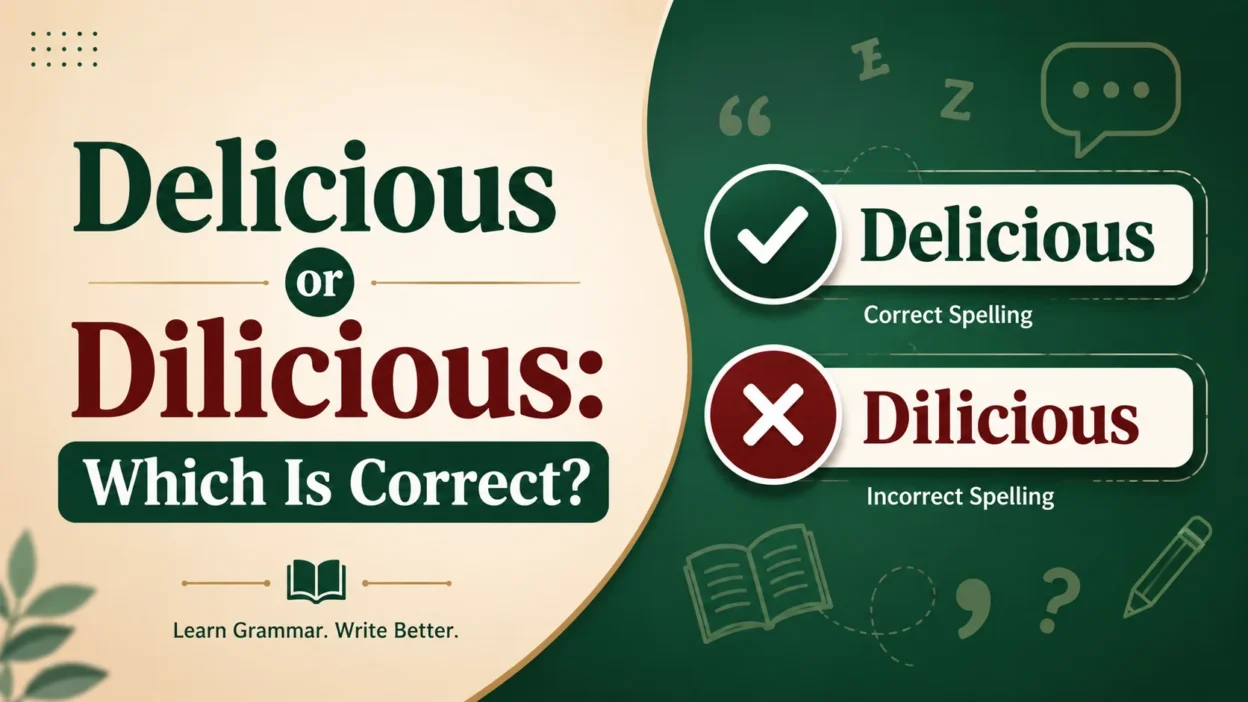
The keyword Delicious or Dilicious creates confusion for many learners because both words have a similar sound, but only delicious is the correct word in the English language. The correct spelling follows standard English grammar, while dilicious is an incorrect spelling and a common misspelling caused by pronunciation and fast speech. Understanding the meaning, word choice, and proper usage helps you avoid this simple mistake and improve your writing with greater clarity.
The word delicious works as an adjective for food description when something has a pleasing flavour or tastes very good. You can use it for meals, chocolate cake, soup, and many other dishes. For example, “The chocolate cake is delicious” shows the correct sentence usage because it describes enjoyable food. However, “The soup is dilicious” contains a spelling mistake because dilicious is not a recognised word. Practising these examples through language learning helps improve your vocabulary and understanding.
Good communication depends on choosing the right words and building clear sentences. When readers and speakers see the correct spelling, they understand your message more easily. In food writing, reviews, social posts, menus, and everyday messages, using the correct form makes your content look more polished. Paying attention to spelling errors, written English, and the familiar pattern of words helps you remember the standard form and use delicious correctly with stronger confidence.
Delicious or Dilicious: The Correct Spelling Explained
The correct spelling is delicious, while dilicious is a common misspelling that does not appear in standard English dictionaries. The word delicious is used to describe food, drinks, or flavors that have a very pleasant taste. Many people confuse these words because they have a similar sound when spoken, but their spelling is different. Learning the correct word choice helps improve your English vocabulary, writing, and communication skills.
Delicious or Dilicious: The Right Form Is Delicious
The standard English spelling is delicious. It means something tastes very good, smells wonderful, or gives great pleasure to eat. You can also use it in a broader sense when you want to praise something pleasant, rich, or enjoyable.
Dilicious is not the correct spelling in standard English. In most cases, it is just an error caused by pronunciation or fast typing. If you use dilicious in a school paper, blog post, review, or caption, many readers will notice the mistake right away.
A simple rule helps here: if you are talking about taste, treat delicious as the only spelling you need.
The Meaning and Definition of Delicious
At its core, delicious is an adjective. It describes food and drink that taste excellent. A warm pie can be delicious. Fresh soup can be delicious. A slice of mango on a summer afternoon can be delicious too.
The word does more than say “good.” It suggests real enjoyment. It carries warmth, comfort, and approval. That is why food writers use it so often. It is also why the spelling matters. A word that sounds elegant should look elegant on the page.
Why Delicious Is the Standard English Spelling
English spellings often come from older language patterns. They do not always match modern pronunciation in a neat one-to-one way. Delicious has a stable, long-established spelling in English, and dictionaries list that spelling as standard.
The word is built from a familiar structure. Once you recognize that structure, the spelling feels less random. That matters because many spelling errors happen when a person writes by sound alone instead of by memory and pattern. English does not always reward sound-based spelling. This is one of those cases.
The Origin and Word Formation of Delicious
The word delicious comes through older language roots tied to pleasure and delight. That background helps explain its meaning. The word has always carried a sense of enjoyment, especially pleasure in taste.
You do not need the historical details to use the word correctly. Still, knowing that it has a long and established place in English makes the correct spelling easier to trust. Words with a deep history often look more fixed than casual misspellings do. Dilicious feels improvised. Delicious feels settled.
Why Is It Spelled “Delicious” Instead of “Dilicious”?
The correct spelling is delicious because English follows established spelling patterns rather than only matching pronunciation. The middle “e” is an important part of the word’s structure, even though it may sound less noticeable when people speak quickly. The spelling dilicious is a common mistake caused by hearing the word and writing it based on sound alone. Remembering the correct form helps improve your English vocabulary, writing, and overall word choice.
The Role of the E in the Correct Spelling
The extra vowel in the middle is not decoration. It belongs there. That e helps form the accepted spelling delicious. Drop it and you no longer have the standard word.
That is one reason the mistake happens. When people say the word quickly, the middle vowel can blur. In fast speech, delicious may sound like it has fewer visible parts than it actually does. The ear hears a smooth flow. The hand guesses wrong.
How Pronunciation Creates Spelling Confusion
This is a classic spelling trap. English speakers often trust sound more than structure. That works for a lot of words, but not all of them.
Think about it this way: if you only wrote exactly what you hear in a quick conversation, English spelling would become a mess very fast. That is why readers need standard forms, not just sound-based guesses.
Here, the pronunciation can make dilicious seem possible. It is not standard, though. It is just a sound-driven mistake.
Why Similar Sounds Do Not Always Follow Similar Spellings
English is full of words that sound one way and spell another. That mismatch can frustrate learners, but it also explains why spelling must be learned carefully.
For example, a word can sound smooth and still keep a letter that seems unnecessary. Another word can hide letters that your ear barely notices. This is one of the reasons people keep spelling lists, use spellcheck, and reread their work before sending it.
In short, spelling is not only about how a word sounds. It is about how the language has agreed to write it.
Understanding the Misspelling “Dilicious”
The word “dilicious” is a common misspelling of the correct word “delicious.” Many people write it this way because the two words sound similar when spoken, especially during fast conversations. However, dilicious is not accepted in standard English spelling and should not be used in formal writing. Understanding this small spelling difference helps you avoid mistakes and use the correct word choice when describing tasty food or enjoyable experiences.
Is Dilicious a Real English Word?
In standard English, dilicious is not the correct word. Most dictionaries and style guides would treat it as an error rather than an accepted form.
That does not mean no one ever writes it. People do. They write it in texts, captions, drafts, and casual notes. But common use does not automatically make a word correct. If the goal is clear, polished writing, delicious is the form to choose.
Why People Write Dilicious
There are a few common reasons:
- They hear the word and spell it by sound.
- They type quickly and miss the middle vowel.
- They confuse it with playful or stylized writing.
- They do not double-check before posting.
This is not unusual. Spelling mistakes often happen when speed beats attention. That is true for students, professionals, and even strong writers on a rushed day.
How Typing Habits Create the Error
Typing habits can be sneaky. If you often spell words the way they sound, your fingers may repeat that habit before your brain catches it. Autocorrect helps sometimes, but it does not solve everything.
A careful reread usually catches the problem. So do a quick pause before posting. One tiny check can save a sentence from looking sloppy.
Delicious vs Dilicious: Side-by-Side Comparison Table
| Word | Correct? | Part of Speech | Meaning | Example |
| delicious | Yes | Adjective | Very tasty or highly pleasing | The cake was delicious. |
| dilicious | No | Misspelling | Not standard English | The cake was dilicious. |
The table makes the choice easy. If you want the standard word, use delicious.
Examples of Correct Usage of Delicious
The word delicious is used to describe food, drinks, or flavors that are extremely enjoyable. You can use it in everyday sentences like “The pizza was delicious” or “This homemade soup tastes delicious.” It also works well in reviews, recipes, and social media posts when you want to express appreciation for a meal. Using delicious correctly makes your writing more colorful and helps readers imagine the taste and experience.
Using Delicious to Describe Food and Drinks
The most common use is food.
- The pasta was delicious.
- That soup smells delicious.
- Her homemade bread is always delicious.
- This coffee tastes delicious with a little cinnamon.
The word works because it gives the reader a strong taste image. You can almost taste the dish through the sentence.
Using Delicious in Everyday Conversations
People use delicious outside formal writing too.
- “That meal was delicious.”
- “Your cookies look delicious.”
- “This fruit is delicious when it is cold.”
The word feels natural in speech because it is simple, familiar, and positive.
Using Delicious in Reviews, Blogs, and Social Media
Food reviews love this word. So do restaurant posts and recipe blogs.
A quick review might say:
“The burger was delicious, juicy, and cooked just right.”
That kind of sentence works because delicious adds instant appeal. It tells readers the food is worth noticing.
When to Use Delicious Correctly
Use delicious when you want to describe food, drinks, or flavors that taste extremely good and enjoyable. This adjective helps express pleasure and appreciation for something you eat or drink. For example, you can say “The homemade cake is delicious” or “This coffee tastes delicious.” You can also use delicious in reviews, recipes, and everyday conversations to make your writing more descriptive and engaging.
Describing Taste, Flavor, and Food Quality
Use delicious food when food tastes excellent. That is the clearest and most common use.
It works for:
- meals
- desserts
- drinks
- snacks
- sauces
- fruit
- bakery items
If the food makes you smile, delicious probably fits.
Using Delicious as an Adjective
Delicious describes a noun. It gives more detail about food or something enjoyable.
Examples:
- Delicious pizza
- Delicious tea
- Delicious smell
- Delicious treat
The word adds quality. It paints a picture.
Common Sentence Patterns With Delicious
You will often see these patterns:
- The food was delicious.
- That smells delicious.
- This looks delicious.
- Her recipe is delicious.
These patterns are short, direct, and natural. They also make spelling easy to practice because the word appears in a familiar place.
Common Spelling Mistakes Similar to Dilicious
Many English learners make spelling mistakes similar to dilicious because some words sound different from how they are written. These errors often happen when people rely only on pronunciation instead of remembering the correct spelling and word structure. Common examples include breakfast instead of breakfast, hoping instead of hoping, and position instead of position. Learning these confusing words through regular reading, writing, and practice can improve your English vocabulary and reduce everyday mistakes.
Confusing Vowel Sounds in English Words
Vowels cause a lot of spelling trouble. A small vowel change can create a new word or a wrong one. That is why delicious can become dilicious so easily.
English learners often hear the sound correctly but miss the written pattern. The result is a spelling that feels close but still misses the mark.
Adding or Removing Letters Based on Pronunciation
This mistake often happens with words that flow smoothly in speech. A writer may leave out a vowel because the word sounds compressed. Or they may add a letter because the word seems to need one.
Neither habit is safe on its own. Standard spelling wins over guesswork.
Why English Spelling Can Be Difficult for Learners
English spelling can feel unfair at times. A word may look simple and still hide a tricky structure. That is why learners benefit from reading widely, writing often, and checking words they are not fully sure about.
The good news is that repeated exposure helps. The more often you see delicious, the more natural it becomes.
How Can You Avoid Spelling Mistakes Like Dilicious?
Avoiding spelling mistakes like dilicious becomes easier when you practice reading, writing, and checking unfamiliar words regularly. Pay attention to the correct spelling of delicious and learn words through context instead of only relying on how they sound. Using a dictionary, spell-check tools, and memory tricks can improve your English vocabulary and help you write with more confidence. A quick review before sharing any sentence can prevent simple errors and improve your overall communication.
Learn Words Through Reading and Context
One of the best ways to improve spelling is through reading. When you see delicious in real writing again and again, your brain starts storing the correct form.
Context helps too. If the sentence is about taste, the word almost always appears as delicious. That kind of pattern is useful.
Use Memory Tricks for Difficult Spellings
A simple memory trick can help:
- Delicious has the same core sound as delight and delicate in the sense of smooth flow.
- The word ends cleanly with -ious, a common English ending.
You can also think: delicious is the real word you would see on a menu, in a review, or in a recipe book. Dilicious is just the off-brand version.
Check Spelling Before Publishing or Submitting Writing
This sounds basic because it is basic. And it works.
Before posting or submitting, read the line one more time. That one pass catches many errors that the first draft misses. A five-second check can save a lot of embarrassment.
Delicious Spelling Practice: Quick Quiz
Test your spelling skills with a quick delicious practice quiz to check whether you can choose the correct word. Try selecting between delicious and dilicious in different sentences to strengthen your English vocabulary. This simple exercise helps you remember the right spelling and avoid common mistakes when writing about food, reviews, or everyday experiences.
Choose the Correct Word
Pick the right spelling:
- The cake was delicious / dilicious.
- Her homemade soup is delicious / dilicious.
- That dessert looks delicious / dilicious.
Answers: delicious, delicious, delicious
Fill-in-the-Blank Practice
- The strawberries taste __________.
- His dinner smelled __________.
- Your recipe looks __________.
All three answers: delicious
Why This Practice Helps
Small drills build strong habits. Once you repeat the correct spelling a few times, it becomes easier to trust your first instinct the next time you write.
Related Word Confusions You May Want to Learn
English has many words that look or sound similar but have different spellings and meanings. Learning common word pairs like breakfast or breakfast, hoping or hoping, and position or position helps you avoid frequent grammar mistakes. These small spelling differences can improve your writing clarity and make your communication more accurate. Understanding these confusing words builds stronger English language skills over time.
Breakfast or Breakfeast: Which Is Correct?
The correct spelling is breakfast. The word may sound odd to learners because the spelling does not match the way it is sometimes pronounced in fast speech.
Hoping or Hopeing: Which Is Correct?
The correct spelling is hoping. When a base word ends in silent e, English often drops the e before adding -ing.
Hexagon or Hectagon: Which Is Correct?
The correct word is hexagon. It refers to a shape with six sides.
Prevention or Preventation: Which Is Correct?
The correct spelling is prevention. Preventation is not standard English.
Position or Position: Which Is Correct?
The correct spelling is position. The double s in position is a common but incorrect guess.
Chafing or Chaffing: Which Is Correct?
The correct spelling depends on the meaning, but in many everyday cases chafing is the intended word. English spelling needs context.
Case Studies: Real-Life Spelling Moments
Real-life examples show how small spelling mistakes can change the quality of your writing. In one case, a food blogger wrote “dilicious” instead of “delicious” in a recipe review, which distracted readers from the great description. Another example happened when a student used the wrong spelling in a class assignment and learned that checking word choice improves English grammar and communication. These moments show that using the correct spelling builds confidence and helps your message appear more professional.
A Restaurant Review
A customer writes, “The dessert was dilicious.”
The review still sends the right message, but the spelling distracts from the praise. If the writer uses delicious, the sentence looks more polished and trustworthy.
A Social Media Caption
Someone posts a photo of pancakes and writes, “Sunday breakfast was dilicious.”
The caption feels cheerful, but the misspelling stands out. A single letter changes the tone from smooth to sloppy.
A Classroom Example
A student turns in a food description assignment and writes, “The soup was dilicious.”
The teacher understands the meaning, but the spelling weakens the work. Correct spelling shows care, and that matters in school writing.
Conclusion
Understanding the difference between delicious and dilicious makes your English writing clearer and more accurate. The correct spelling is delicious, which describes food, flavours, and meals that have a very enjoyable taste. Although dilicious may sound similar during fast speech, it is a common misspelling and should not be used in standard English language writing. By improving your vocabulary, practising proper word choice, and paying attention to spelling mistakes, you can communicate your ideas with better clarity and confidence.
FAQS
Q1.Is delicious or dilicious the correct spelling?
The correct spelling is delicious. The word dilicious is an incorrect spelling and is considered a common misspelling in English.
Q2.Why do people write dilicious instead of delicious?
Many people write dilicious because both words have a similar pronunciation. The mistake often happens when someone follows the sound of a word instead of remembering its correct written form.
Q3.What does delicious mean?
Delicious means something has a very pleasant taste or flavour. It is commonly used to describe food, drinks, desserts, and meals that people enjoy.
Q4.Can delicious be used in a sentence?
Yes, you can use delicious in many sentences. For example, “The chocolate cake is delicious” correctly describes a cake with a great taste.
Q5.How can I remember the spelling of delicious?
You can remember delicious things by practising the word in different sentences and noticing its spelling while reading. Regular writing practice and exposure to correct English vocabulary make the spelling easier to remember.